
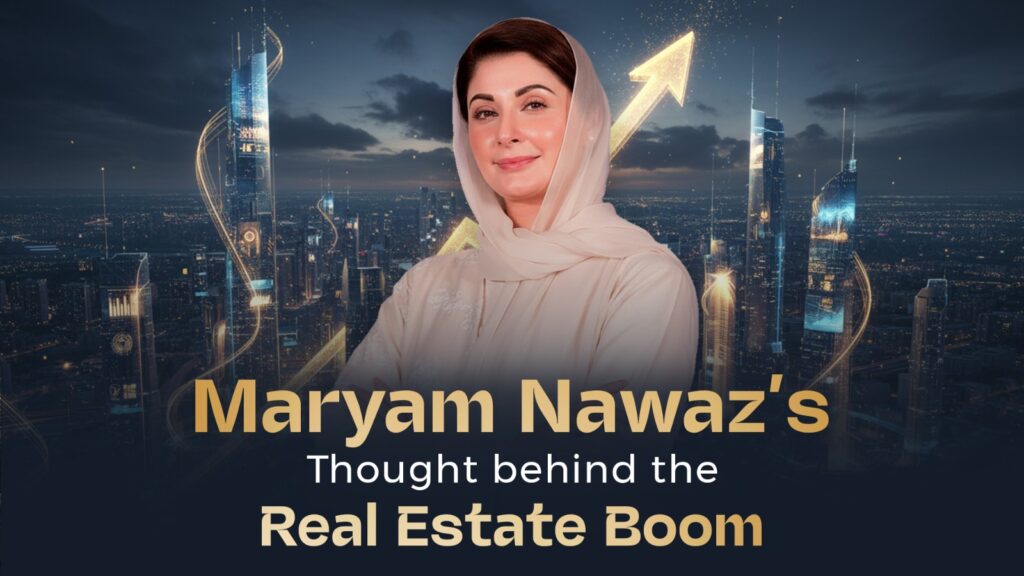
Pakistan’s real estate sector has witnessed significant expansion in recent years, driven by urbanization, infrastructure upgrades, overseas investment, and government-backed development initiatives. Many political observers and analysts link this momentum to the forward-looking governance model promoted by Maryam Nawaz, particularly her emphasis on structured urban growth, infrastructure modernization, and investor confidence.
1. Infrastructure-Led Economic Growth
A central thought behind the real estate boom is the belief that infrastructure development stimulates property markets. Under the broader development agenda associated with Maryam Nawaz, roads, flyovers, urban transport systems, and city expansion projects have been viewed as catalysts for land appreciation.
When governments invest in connectivity—such as highways, ring roads, and public facilities—land that was once considered peripheral quickly becomes prime real estate. This infrastructure-first approach creates ripple effects: construction activity rises, housing demand increases, and commercial hubs begin to flourish.
2. Planned Urban Expansion
Another core idea often associated with Maryam Nawaz’s governance philosophy is regulated and planned expansion instead of unstructured sprawl. Rapid urbanization in Pakistan has created pressure on major cities like Lahore and Rawalpindi.
The solution has been to encourage organized housing societies, master-planned communities, and vertical development. Planned expansion not only increases property supply but also attracts middle-class buyers, overseas Pakistanis, and long-term investors seeking secure assets.
3. Investor Confidence & Regulatory Support
Real estate thrives on trust. Policies emphasizing transparency, documentation, and regulated development contribute to sustainable growth. Political leadership that supports clearer land records, digitalization, and oversight mechanisms can reduce uncertainty in the market.
The real estate boom is partly fueled by improved investor sentiment—when buyers feel protected under regulatory frameworks, they are more willing to commit capital to housing and commercial projects.
4. Overseas Pakistani Engagement
Another strategic thought behind the boom is tapping into overseas Pakistani investment. Remittances play a major role in Pakistan’s economy, and property remains one of the safest and most attractive asset classes for overseas investors.
By creating investor-friendly narratives and improving infrastructure visibility, political leadership has helped position real estate as a stable long-term investment vehicle.
5. Housing as an Economic Engine
Construction is directly linked to over 40 allied industries—cement, steel, paint, labor, transportation, and interior design. Encouraging housing development stimulates employment and boosts economic circulation.
The development-centered thinking associated with Maryam Nawaz aligns with the idea that real estate is not just about property—it is about economic acceleration. When housing projects grow, job creation rises, and economic activity strengthens across multiple sectors.
6. Public–Private Partnership Model
Modern governance increasingly relies on collaboration between public authorities and private developers. Encouraging structured partnerships allows large-scale projects to move forward efficiently.
This model reduces financial pressure on the government while allowing experienced developers to execute high-quality projects, which in turn contributes to overall market expansion.
7. Future Outlook
Looking ahead, Pakistan’s real estate market is expected to remain active due to:
- Rapid population growth
- Expanding urban boundaries
- Infrastructure megaprojects
- Rising housing demand
- Overseas capital inflow
If development-driven policies continue, the real estate sector could remain one of the strongest pillars of economic growth.
Conclusion
The real estate boom in Pakistan reflects a broader development-oriented mindset that prioritizes infrastructure, urban planning, and investor trust. The governance approach associated with Maryam Nawaz emphasizes modernization, structured expansion, and economic stimulation through construction and housing growth.
While market forces ultimately determine property trends, policy direction and political vision play a critical role in shaping investor confidence and long-term urban transformation.